EN
EN

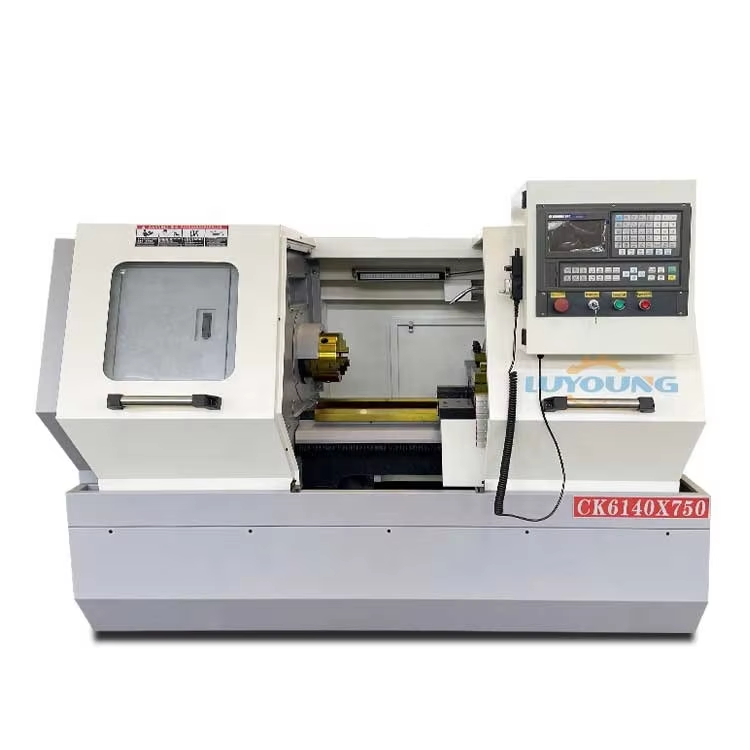
Fanuc CNC Lathe Machine Architecture: Foundations of Stability
Integrated servo-control loop with real-time feedback in Fanuc 0i-D/F Plus systems
The Fanuc CNC lathes come equipped with a closed-loop servo system built right into their 0i-D/F Plus controllers. These systems sample positions every 0.1 milliseconds and can correct deviations in real time whenever errors go beyond about half a micrometer. Open loop systems just don't compare because they accumulate lag over time, which matters a lot when working with tough materials like hardened alloys at speeds approaching 2,500 revolutions per minute. When everything from the servo motors to the encoders and control logic is connected through one fast communication bus instead of separate modules, the whole system becomes much faster. Signal delays drop around 40 percent compared to other setups, so machines run smoother without vibrations even when cutting stainless steel parts that get interrupted mid-cut.
Thermal compensation algorithms for drift mitigation in long-cycle turning
When machines run for longer than eight hours straight, Fanuc's thermal management system works against positional drift by placing sensors right in the bed, spindle area, and along the ballscrews. These sensors collect temperature gradient information which gets sent to smart algorithms. The algorithms then create models of how heat affects expansion and adjust reference points on the fly. This actually corrects position shifts of around 15 microns per meter even when workshops aren't climate controlled. Such performance makes all the difference for making aerospace grade aluminum parts, since those tiny tolerances of plus or minus 0.005 mm can be ruined by just a little thermal growth. Testing done by third parties shows that the system keeps positions stable within 2 microns over full 12 hour production cycles, even when workshop temperatures swing by as much as 15 degrees Celsius throughout the day.
Precision Control Systems: Achieving Sub-Micron Repeatability and Dynamic Stability
Positional repeatability < ±0.001 mm across 10,000 cycles (Fanuc 0i-D)
Fanuc's 0i-D controller series achieves incredible repeat accuracy down to less than plus or minus 0.001mm after running through 10,000 straight machining cycles thanks to its digital servos and super precise encoders. This kind of consistent performance really matters when making parts in large quantities, particularly when working with tough materials like hardened steel. The system also includes built-in temperature monitoring and special mounts that absorb vibrations, which helps keep everything stable even during long production runs. These features are why many manufacturers in the medical field rely on this technology to produce implants with practically no defects.
AI-based look-ahead control for smooth acceleration/deceleration
Fanuc's AI look ahead feature checks out the tool path geometry way ahead of where the machine actually is right now, sometimes looking at as many as 500 blocks forward. This helps predict those pesky inertia forces and makes sure the machine moves from one position to another much more smoothly. When it comes to acceleration, these systems constantly adjust based on what's happening with the cutting load and how dense the material being worked on really is. This approach cuts down on that sudden jerking movement between axes by about 40% compared to older CNC setups. For manufacturers working on delicate thin walled components used in aircraft construction, this means surfaces come out looking much smoother with fewer visible tool marks. Tools last longer too since they're not subjected to so many abrupt changes. And best of all, operators don't need to keep tweaking parameters manually throughout production runs.
Controller-Software Synergy: Adaptive Intelligence for Vibration-Sensitive Operations
Adaptive feedrate override during vibration-prone cuts
Fanuc's adaptive feedrate technology actually spots those annoying resonant frequencies through built-in vibration sensors. When things start getting too intense beyond certain limits, the system will cut down feed rates by roughly 40% automatically. This keeps the cutting process going strong while knocking out that pesky chatter problem machinists hate so much. Real world tests on thin wall titanium parts showed vibration levels dropping around 60%, though results can vary depending on setup conditions. The system reacts super fast at the microsecond level to changes in spindle load and harmonic patterns. What does this mean for shops? Less downtime from tool breakage and better dimensional control on those tricky aerospace parts where even tiny deviations matter a lot in flight safety.
Damping optimization: Why higher servo bandwidth requires intelligent constraint
Fanuc systems can reach servo bandwidths above 500 Hz which helps them respond really fast. But if we just keep increasing bandwidth without controls, there's actually a bigger chance of oscillation problems especially when cutting gets interrupted sometimes as much as 70%. That's why these systems use special damping algorithms that work on specific frequencies where resonance happens. The system looks for signs of chatter using spectral analysis techniques and then sends out counter vibrations through the servo motors to cancel out the unwanted motion. Testing has shown around 35% better surface finish (Ra value) when doing high speed aluminum turning operations. This proves that smart damping technology keeps those tiny repeating measurements accurate even in situations where vibrations could cause issues.
FAQ
Q1: What is the purpose of the closed-loop servo system in Fanuc CNC lathes?
The closed-loop servo system in Fanuc CNC lathes ensures precision by correcting deviations in real-time and reducing signal delays by about 40% compared to other setups. This results in smoother operation and less vibration, especially when machining tough materials.
Q2: How do the thermal compensation algorithms benefit CNC machines in long-cycle operations?
These algorithms mitigate positional drift during extended operations by using sensors to monitor temperature gradients and making real-time adjustments, maintaining accuracy even with temperature variations in non-climate controlled environments.
Q3: How does Fanuc's AI-based look-ahead control improve machining?
The AI look-ahead feature anticipates tool path requirements, smoothing transitions and reducing abrupt movements. This improves surface quality and tool longevity, particularly useful for delicate workpieces.
Q4: What role does adaptive feedrate technology play in reducing vibrations?
The adaptive feedrate technology minimizes vibrations during machining by automatically adjusting feed rates based on resonant frequencies, leading to reduced downtime and enhanced dimensional control.