EN
EN

Defining Precision Requirements in Metal Surface Grinding
When it comes to high precision metal surface grinding, there are really just two main things that need tight control: how rough the surface is (known as Ra values) and how flat it needs to be. Surface roughness gets measured in micrometers, basically tiny units that show those little bumps and valleys on the material's surface. For parts used in aerospace applications, manufacturers usually shoot for Ra values below 0.4 micrometers because smoother surfaces create less friction during operation. Then there's flatness tolerance which tells us how much a part can deviate from being perfectly level. Take medical implants for instance these devices generally need to stay within about 5 micrometers of perfect flatness to function properly inside the body. Getting these specs right matters a lot across different industries where even small variations can cause big problems down the line.
Key Precision Metrics: Surface Roughness (Ra Values) and Flatness Tolerances
| Industry Application | Target Ra Range (µm) | Flatness Tolerance (µm) |
|---|---|---|
| Turbine blade profiles | 0.2–0.5 | ±3 |
| Bearing raceways | 0.1–0.3 | ±1.5 |
| Optical mounting plates | 0.05–0.15 | ±0.5 |
Tight Tolerance Demands in Aerospace, Medical, and Automotive Industries
For aerospace actuators, getting those grinding accuracies down to 1.5 microns or below is absolutely critical if we want to stop hydraulic fluid from leaking out. Meanwhile medical bone drill guides need an Ra value under 0.2 microns just to be compatible with human tissue. When it comes to cars, fuel injection nozzles depend on flat surfaces within 2 microns tolerance over 50mm areas so they can maintain proper spray patterns. The demand for tighter tolerances keeps growing across all these industries, which naturally pushes forward what's possible with grinding tech. Take aerospace alone - according to the Precision Machining Journal, surface finish requirements there have gotten 23 percent stricter since 2020. That kind of relentless pursuit of perfection means manufacturers constantly have to innovate their approaches.
How Material Properties Affect Grinding Accuracy and Surface Finish
When working with hardened tool steels that have an HRC rating above 60, diamond or CBN abrasives are pretty much essential if we want to maintain those tight tolerances during the grinding process. Aluminum alloys tend to smear easily, so most shops find they get better results when running their grinding wheels at slower speeds around 15 to 20 meters per second. The difference in how materials conduct heat makes a big impact on what kind of coolant system works best too. Copper alloys really benefit from high pressure emulsion cooling because they can move heat away about 40 percent quicker compared to stainless steel parts. This matters a lot in production environments where thermal management directly affects both part quality and machine tool life.
Comparing Grinding Machine Types for High-Precision Applications
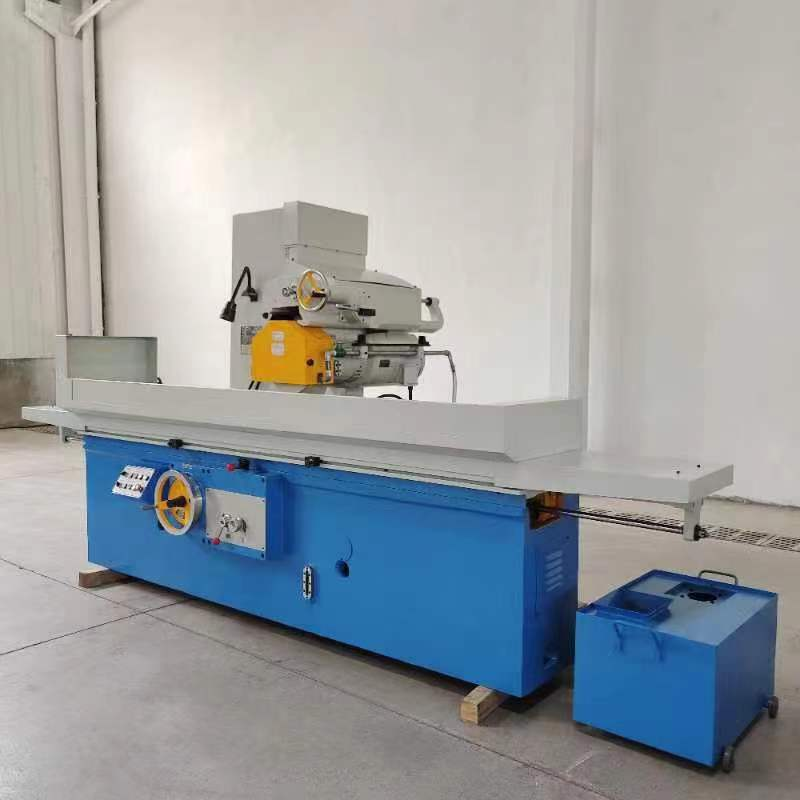
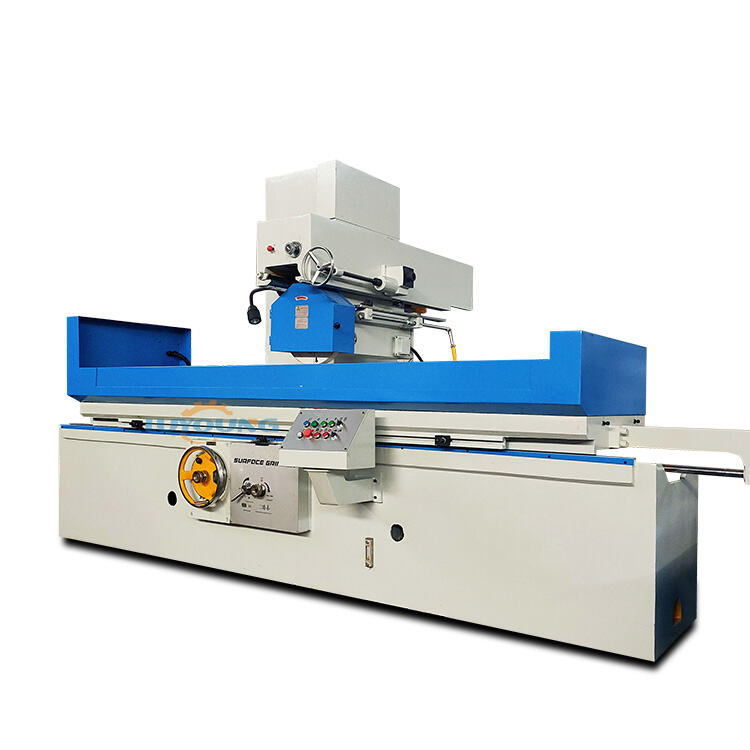
Manual, Automatic, and CNC Surface Grinders: Performance and Precision Trade-Offs
Grinding machines operated manually really rely on how skilled the person is at the job, typically getting around plus or minus 5 microns accuracy which works fine for making prototypes or doing small batches. When we switch to automatic systems, there's less variation from one piece to another because people aren't directly involved all the time. These machines can hold about plus or minus 3 microns consistently and they cut down on production time too, roughly 30% faster than when done manually. For big scale manufacturing where precision matters most, CNC grinders are the way to go. They use computer programming to keep tolerances tight at around 1 micron across thousands of identical parts. This level of accuracy becomes absolutely necessary when working on components like those found in aircraft bearings that need super smooth surfaces with roughness values below 0.4 microns.
CNC Grinding Machines: Enabling Repeatability and Micron-Level Accuracy
Today's CNC grinding machines come equipped with hydrostatic guideways and linear motors that can get positional accuracy as tight as 0.1 microns. These systems keep their temperature stable within plus or minus half a degree Celsius throughout an entire 8 hour workday, which means they experience far fewer thermal drift issues compared to older equipment about 78% less actually. Setup times have dropped dramatically thanks to pre-programmed tool paths cutting down the process by around two thirds. And when it comes to making medical implants where precision is absolutely critical, manufacturers report first pass success rates hovering near 99.8%. That kind of reliability makes all the difference in industries where even tiny deviations can lead to major problems.
Specialized Solutions: Creep-Feed and Centerless Grinders in Precision Contexts
Creep feed grinding machines take off material between 0.1 and 6 millimeters during each pass, which makes these tools perfect for tricky shapes such as turbine blade roots where profile variations need to stay under 2 microns. For shaft production on a large scale, centerless grinders are a game changer since they get rid of those pesky chucking errors thanks to their self centering workpiece rotation system. These machines keep diameters consistent down to just 0.25 microns. What really stands out though is the adaptive dressing technology used across both grinder types. Every fifty cycles, these systems automatically adjust the wheel geometry so surface finishes remain stable within plus or minus 0.05 microns Ra. This kind of precision matters a lot when manufacturing parts that demand absolute accuracy from start to finish.
Core Technologies Driving Ultra-Precision Grinding Performance
Hydrostatic vs. Air Bearing Spindles: Maximizing Rotational Accuracy
Hydrostatic spindles use oil-lubricated bearings to achieve rotational accuracy below 0.1 µm/m (ASME 2022), making them ideal for grinding hardened alloys to sub-0.5 Ra finishes. Air bearing spindles offer contamination-free operation critical for optical applications but provide 35% less load capacity than fluid-based systems (SME 2023).
Plastic-Coated vs. Hydrostatic Guideways: Stability and Wear Resistance
Polymer-coated linear guides reduce stick-slip effects by 40% compared to traditional steel guides (IMTS 2023 data). However, hydrostatic guideways eliminate mechanical contact entirely, ensuring long-term stability required for maintaining ±2 µm flatness during extended production runs.
Machine Rigidity, Thermal Control, and Vibration Damping Techniques
Ultra-precision grinding relies on three foundational technologies:
- Granite/mineral composite bases, which absorb 80% more vibration than cast iron (ASTM E1876-22)
- Active cooling systems that regulate spindle temperature within ±0.5°C (ASME 2022)
- Real-time vibration compensation algorithms that suppress harmonic disturbances by 92% (DIN 45691:2021)
Together, these features enable sub-micron repeatability when machining diverse materials—from aerospace aluminum to medical-grade ceramics.
Leveraging Advanced Controls and Smart Features for Process Optimization
Programmable Logic and Intuitive Interfaces in Modern Grinding Systems
Today's CNC grinders come equipped with PLCs that let machinists set tolerances down to the micron level while keeping results consistent every single time. The touchscreen controls make it much easier to tweak parameters such as wheel rotation speeds, how fast the part moves through the machine, and just how deep the grinding wheel cuts into the material. Setup times have dropped significantly too, around 40% faster than when everything had to be adjusted manually back in the day. Many machines also include preset programs specifically for tough materials like titanium alloys or various grades of hardened steel. These presets ensure that parts come out exactly the same way whether it's first thing Monday morning or late Friday afternoon, no matter who happens to be running the machine at the moment.
Real-Time Monitoring, Adaptive Feedback, and Closed-Loop Control
In-process sensors monitor spindle vibration, workpiece temperature, and surface quality every 0.5 seconds. When deviations exceed 5% of set thresholds, closed-loop controls automatically adjust grinding forces and coolant flow. This dynamic response sustains Ra values below 0.4 µm throughout prolonged runs—particularly vital in medical device manufacturing where surface integrity is non-negotiable.
Smart Diagnostics and Predictive Maintenance in CNC Grinding Machines
Machine learning models analyze performance trends to predict bearing wear or servo degradation 200–300 hours before failure. Vibration spectrum analysis detects anomalies with 92% accuracy, enabling proactive maintenance during planned downtimes. Integrated thermal imaging identifies misalignments in hydrostatic guideways early, preventing geometric errors in large aerospace components.
Optimizing Grinding Wheels and Process Parameters for Material Compatibility
Selecting Abrasive Types, Grit Sizes, and Bond Materials for Specific Metals
When selecting abrasives, the right combination of grit size and bonding material makes all the difference in how fast work gets done and what kind of finish ends up on the part. For taking off lots of material from tool steels, aluminum oxide wheels work best around speeds between 8 to 12 meters per second. But if dealing with those tough aerospace nickel alloys, nothing beats cubic boron nitride (CBN) which can get surfaces down to Ra values below 0.4 micrometers. The grit size matters too since it affects both how much material comes off and the smoothness left behind. Heavy duty jobs on hardened D2 steel often call for 80 grit electroplated wheels, while finer 220 grit resin bonded options handle titanium polishing down to Ra 0.1 micrometer finishes. What holds everything together matters just as much. Vitrified bonds hold their shape even when things get hot during Inconel 718 grinding sessions. And according to recent studies from Ponemon Institute back in 2023, hybrid bonds actually cut down wheel wear by about a quarter when working with stainless steel parts.
Coolant Strategies and Dressing Techniques for Consistent Surface Quality
Using high pressure flood coolants at or above 20 bar helps stop thermal distortion problems in thin walled aluminum parts, which cuts down surface defects compared to mist systems by roughly 40 percent according to industry tests. Keeping grinding wheels properly dressed is essential too. Diamond roll truing about every fifty cycles keeps the flatness within plus or minus two microns when working on bearing races. When dealing with superalloys, cold coolant methods can actually drop those hidden layer temperatures by around sixty degrees Celsius. This makes it possible to achieve surface finishes below 0.8 microns roughness average without making the workpiece harder during processing.
Case Study: Achieving Sub-Micron Ra Finishes in Hardened Steel Applications
A 2023 trial using a hybrid bond wheel on AISI 52100 bearing steel (60 HRC) achieved Ra 0.3 µm through optimized settings:
| Parameter | Setting | Result vs Standard |
|---|---|---|
| Wheel Speed | 35 m/s | +12% MRR |
| Feed Rate | 2 µm/pass | -18% Wheel Wear |
| Coolant Pressure | 25 bar | -44% Surface Defects |
| A closed-loop dressing system adjusted diamond roll engagement every 15 cycles, maintaining ±0.05 µm Ra variance over 200 hours of continuous operation. |
FAQ
What is surface roughness and why is it important?
Surface roughness, measured in micrometers, refers to the tiny bumps and valleys on a material's surface. It's crucial because smoother surfaces create less friction, which is essential in industries that demand high precision.
How does flatness tolerance impact functionality?
Flatness tolerance indicates how much a part can deviate from being perfectly level. Proper flatness is vital for the functionality of components like medical implants and automotive parts, where small deviations can cause operational issues.
Why do different industries have varying Ra and flatness requirements?
Different industries have specific operational demands. For example, aerospace components require very smooth surfaces to reduce friction and enhance performance, while medical implants need accurate flatness to function correctly in the body.
What technologies aid in achieving precision grinding?
Technologies like CNC grinders, hydrostatic spindles, and advanced cooling systems help achieve precision by maintaining tight tolerances, repeatability, and temperature stability, which are essential for high-quality finishes.
Table of Contents
- Defining Precision Requirements in Metal Surface Grinding
- Comparing Grinding Machine Types for High-Precision Applications
- Core Technologies Driving Ultra-Precision Grinding Performance
- Leveraging Advanced Controls and Smart Features for Process Optimization
- Optimizing Grinding Wheels and Process Parameters for Material Compatibility
- FAQ