EN
EN

Core Advantages of Vertical CNC Machining Centers for High-Volume Batch Production
Rigidity and Z-axis accessibility enable tighter tolerances across 50–500-part batches
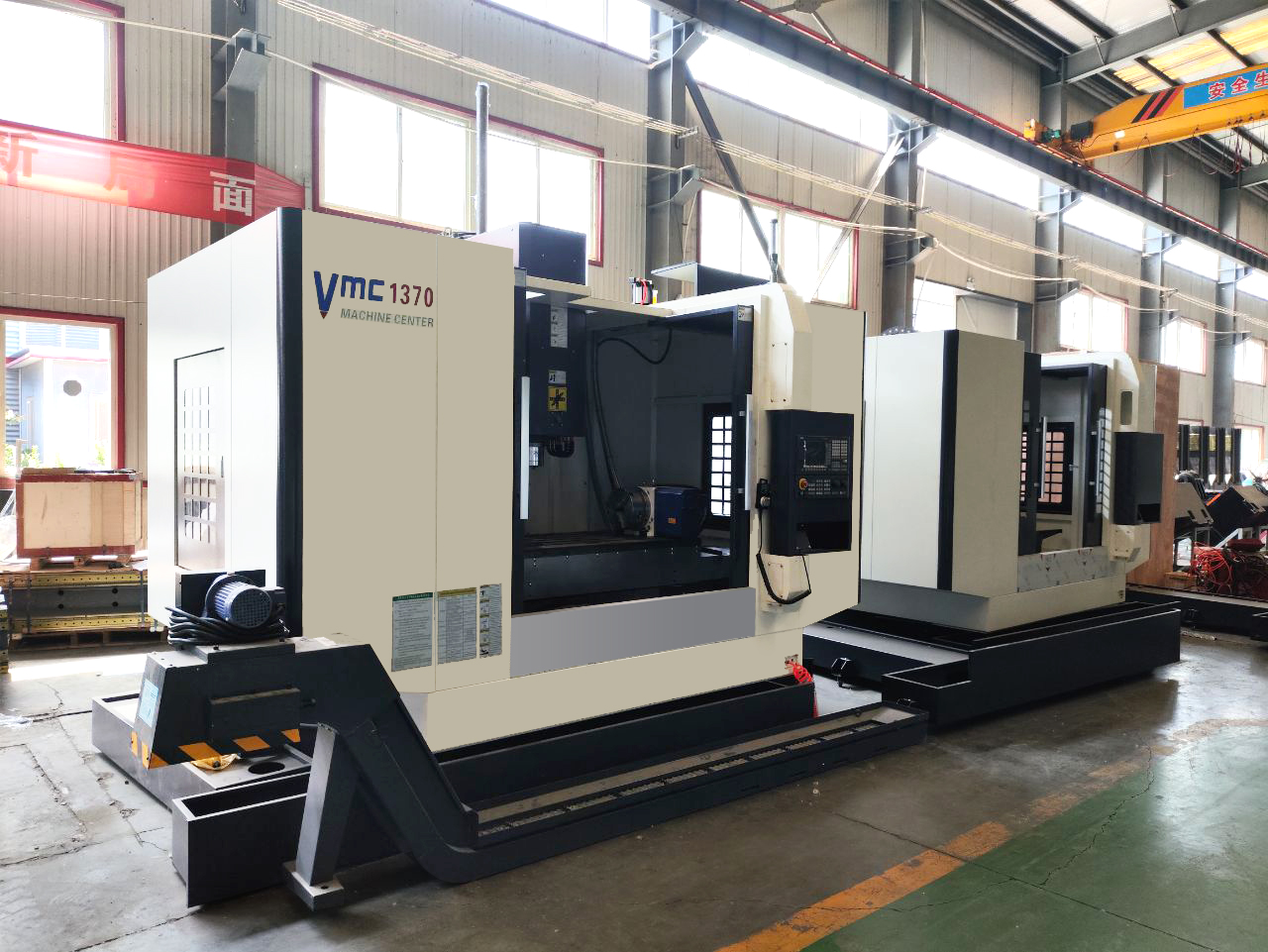
Vertical CNC machines get their strength from solid column construction and components that are ground to exact specifications. This kind of stability makes all the difference when working on complicated shapes where tolerances need to be within half a thousandth of an inch. Shops can count on these specs holding steady whether they're running off 50 parts or pushing through 500 in a batch. The way the machine is set up vertically gives tools clear access to work areas, which means deeper cavities can be milled efficiently and 5-axis contouring becomes possible without having to stop and reposition the part. Real world testing has found that shops switching to vertical setups see around a 40% drop in dimensional inconsistencies compared to what happens with horizontal machines during large production runs.
Thermal stability and compact footprint support consistent part quality in aerospace and medical batch runs
Good thermal management keeps internal temps stable around ±1 degree Celsius even when running for long periods, which matters a lot for sensitive materials like titanium 6Al-4V and Inconel alloys. Because these systems have a small vertical space requirement, they actually reduce problems from thermal expansion. This helps keep parts accurate to about 5 microns across both aerospace manufacturing and medical device fabrication work. The result? Fewer tiny deformations showing up on critical pieces such as jet engine turbine blades or orthopedic implants. Manufacturers report seeing scrap reduction somewhere between 18% and 22% when producing batches of these precision components.
Automation Integration: Enabling Unattended Batch Operation
Vertical CNC machining centers transform high-volume batch production through integrated automation, enabling reliable, extended unmanned operation–essential for consistent output with minimal manual intervention.
High-speed automatic tool changers reduce non-cutting time by up to 68% in repeat-part scenarios
Vertical CNC machines today come equipped with automatic tool changers (ATCs) capable of switching out cutting tools in just over 2 seconds flat. Getting rid of those manual setup waits makes all the difference, particularly when running multiple copies of the same part that require exactly the same sequence of tools again and again. Factories report savings of around 60-70% on downtime, which means their spindles stay busy doing actual work instead of waiting around. Medical device manufacturing really benefits from this capability since these parts often have intricate shapes requiring dozens of different tools during production runs. Speedier tool swaps translate directly into shorter overall production cycles while still maintaining tight tolerances required for implantable components or surgical instruments.
Dual-pallet systems and robotic loading extend lights-out production to 8–24 hours per cycle
Dual pallet changers combined with robotic systems let factories keep running even after regular working hours end. Workers simply place the next part on standby while the machine is still cutting what it has now, which creates something close to nonstop manufacturing. Add automatic material transport to the mix, and plants can operate around the clock for industries like aircraft manufacturing and car production. These vertical machines take up less room on factory floors compared to their horizontal counterparts, making them ideal for tight spaces where automation is needed. Plus, they stay stable temperature-wise so parts maintain their exact measurements during those long periods when nobody's watching.
Optimized CNC Programming for Repeatable Batch Machining
Modular subprograms and parameterized toolpaths cut programming time by 42% for variant-rich families
The vertical CNC machining center makes life easier when dealing with those tricky high-mix, low-to-mid volume production runs thanks to things like modular subprograms and parameterized toolpaths. Think about it this way: modular subprograms basically wrap up chunks of code that get used again and again for stuff like pockets, slots, or contour work. No need to rewrite the same code over and over for similar parts anymore. Parameterized toolpaths take this concept even further. They work with math variables so operators can tweak dimensions, depth settings, feed rates, and tool positions on the fly. Take bolt hole patterns for instance. With just a few variable changes in diameter and coordinates, one program can handle 15 or more different configurations. These approaches cut down manual programming time by around 42% compared to old school methods. That means faster setup times for things like medical implants where tiny dimensional differences matter between batches, or automotive components that need slight modifications from run to run without starting from scratch each time.
| Technique | Function | Batch Production Impact |
|---|---|---|
| Modular Subprograms | Reusable code blocks for common features | Eliminates 70% of repetitive coding tasks |
| Parameterized Toolpaths | Dynamic adjustment of dimensions/toolpaths via variables | Enables single-program adaptation for 15+ variants |
This standardized framework also reduces human error in complex setups. Operators switch between part numbers by modifying parameter inputs–not rewriting entire G-code sequences–ensuring uniform quality across high-mix production while freeing engineering resources for higher-value optimization.
Multi-Operation Capability and Setup Reduction in Vertical CNC Machining Centers
Vertical CNC machining centers bring together several operations at once - milling, drilling, tapping, boring - all in one place so there's no need to move parts between different machines. When a machine can do multiple tasks, it cuts down on setup time by around 60% or so, plus it gets rid of those pesky alignment issues that happen when parts get handled repeatedly. For companies making batches of products, this means changing over between jobs happens much quicker, which typically speeds things up by about 20 to maybe even 30 percent each time through the production cycle. The real advantage comes when manufacturing complicated shapes such as turbine blades or medical devices like hip implants. These machines keep going without stopping, holding tight tolerances of plus or minus 0.005 millimeters throughout the whole process because the part stays fixed in position. Less moving around of parts means better performance metrics across the board and saves money on running costs, especially when producing anywhere from fifty to five hundred items or more.
Frequently Asked Questions
What is the main advantage of vertical CNC machining centers?
Vertical CNC machining centers offer greater rigidity and access to the Z-axis, enabling tighter tolerances and efficient milling, particularly useful for complex parts in high-volume production.
How do vertical CNC machines ensure thermal stability?
Vertical CNC machines maintain thermal stability through effective thermal management systems that keep internal temperatures around ±1 degree Celsius, reducing thermal expansion issues and ensuring consistent part accuracy.
What role does automation play in vertical CNC machining centers?
Automation enables unattended batch operations with features like high-speed automatic tool changers and dual-pallet systems, significantly reducing non-cutting time and enabling extended lights-out production.
How does optimized CNC programming enhance efficiency?
Optimized CNC programming utilizes modular subprograms and parameterized toolpaths, reducing programming time and improving efficiency, allowing for quick adaptations across variant-rich production families.
What is multi-operation capability in CNC machines?
Multi-operation capability allows vertical CNC machines to perform several processes like milling, drilling, tapping, and boring within a single setup, reducing setup time and increasing production speed.
Table of Contents
- Core Advantages of Vertical CNC Machining Centers for High-Volume Batch Production
- Automation Integration: Enabling Unattended Batch Operation
- Optimized CNC Programming for Repeatable Batch Machining
- Multi-Operation Capability and Setup Reduction in Vertical CNC Machining Centers
- Frequently Asked Questions