EN
EN

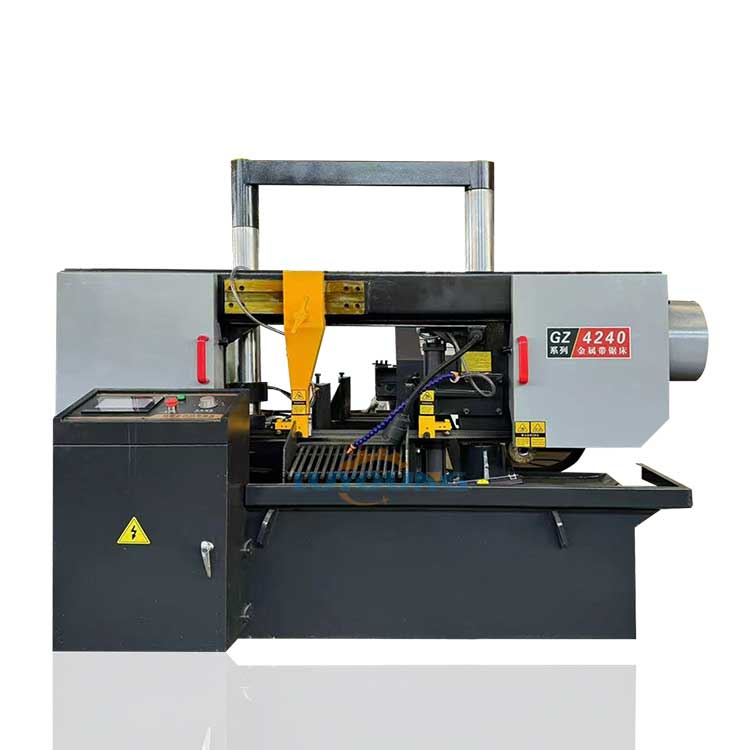
Dual-Column Hydraulic Metal Band Sawing Machines for Thick Steel
How dual-column rigidity eliminates blade deflection when cutting 6+ inch solid steel
Dual column designs offer much better structural stability compared to other configurations, helping resist those sideways forces that can push blades off track when working with thick steel. Standard single column saws tend to bend or deflect quite a bit when tackling solid blocks over 6 inches thick. Some machining tests actually show deflection angles reaching around 0.8 degrees, which leads to those annoying tapered cuts nobody wants. With parallel columns, the cutting force gets spread out evenly across both sides, keeping the blade aligned pretty well within about plus or minus 0.1 degree even when pushing through material at full speed. This kind of stiffness really matters for tough materials like 4340 steel. When blades wander too much during these high tension jobs, teeth start wearing down faster than normal, sometimes as much as 40% quicker according to shop floor observations.
Hydraulic downfeed control: precision pressure modulation (0.05–0.2 mm/sec) for hardened alloys
The latest hydraulic systems allow for extremely fine feed adjustments needed when working with really tough steels that measure between 45 to 65 on the HRC scale. These systems aren't like old school gravity fed ones where pressure just drops naturally. Instead they use closed loop pressure sensors that adjust the downward force anywhere from 20 to 150 psi as needed. This helps keep the cutting blades from digging too deep into those super hard surfaces after work hardening occurs. With this kind of precise control, chips form properly even at very slow feed rates ranging around 0.05 to 0.2 millimeters per second. As a bonus, blades stay cooler too about 60 percent less heat buildup when cutting titanium alloys. Most operators find it helpful to set different pressure profiles depending on what part of the material they're cutting through. This becomes especially important when moving from softer core areas to those harder outer layers commonly found in various tool steels.
Real-world validation: Industry-leading dual-column models achieve 22% higher throughput on 8" 4140 steel vs. single-column metal band sawing machines
Tests done in actual workshop settings show that when it comes to cutting structural steel, dual column hydraulic band saws just plain work better than most other options on the market today. Take for example when working with 8 inch diameter 4140 chromoly steel stock material. The best configured dual column systems can boost production rates by about 22 percent compared to standard models. Plus they tend to get through blades slower too, lasting somewhere between 15 to maybe 18 extra hours before needing replacement. Why does this happen? Well basically because these machines maintain consistent pressure across the cut without wobbling or drifting off track. That means workers spend less time fixing mistakes and more time actually making cuts. Shops that deal regularly with heavy wall thicknesses like those found in pipe sections or forged components will find their bottom line improves significantly. We're talking around $18 to $24 saved per ton processed according to what industry folks have been measuring lately in their own facilities.
Optimal Blade Selection for Heavy-Duty Metal Band Sawing Machines
Carbide-tipped vs. bi-metal blades: TPI, rake angle, and gullet depth for structural steel ≥4"
Carbide tipped blades really stand out against bi metal options when it comes to resisting wear. They maintain their cutting accuracy about three times longer during heavy duty work with structural steels over four inches thick. When dealing with thicker sections, finding the right number of teeth per inch matters a lot. Most folks find that somewhere between three and six teeth works best for these jobs, since fewer teeth help avoid the blade getting stuck. Blades with around ten degrees of positive rake angle plus deeper gullets measuring at least quarter inch do a much better job clearing away chips from the cut area. This setup cuts down on heat buildup by roughly forty percent compared to those standard neutral rake designs. Testing shows carbide blades can handle cutting speeds that are fifty percent faster than regular bi metal blades when working on six inch thick 1045 steel. But there's a catch worth mentioning here too. These carbide blades need pretty exact machine alignment otherwise they tend to crack unexpectedly under stress.
Low-TPI (2–3), variable-pitch carbide blades reduce harmonic vibration in I-beams and HSS tubing
Carbide blades that have variable pitch and around 2 to 3 teeth per inch help cut down on those annoying vibrations when working with structural materials. The uneven spacing between teeth actually reduces chatter by about 35 percent according to some vibration studies done on HSS tubing. With fewer teeth overall, there's more space between them which helps prevent chips from sticking together especially important when cutting through high silicon aluminum I beams. Feed rates can still hit around 80 surface feet per minute though. For high speed steel jobs, carbide tipped versions show roughly 22 percent less bending compared to regular blades, keeping things pretty square within plus or minus 0.1 degree per meter. Plus this setup cuts down on the force needed during cutting by about 18 percent for asymmetrical shapes, so blades don't wander off course as much when dealing with thin walls.
Speed, Feed, and Downfeed Optimization for Maximum Efficiency
SFM sweet spot (40–80) for 1045 steel ≥6": balancing heat dissipation and chip evacuation
When working with a metal band saw on 1045 steel pieces thicker than six inches, running the machine between 40 and 80 surface feet per minute really helps keep blades from wearing out too fast while still getting good production rates. The speed range lets heat escape before it starts damaging those expensive blade teeth, and the aggressive removal of chips keeps swarf from building up around the blade which can lead to problems like friction welding or the blade getting stuck. Going over 80 SFM creates too much heat in these thick cuts, which wears down the teeth faster than anyone wants. If the operator drops below 40 SFM though, chips tend to pile up and this increases cutting resistance quite a bit according to what we've seen in shop tests. For best results, many shops pair their chosen SFM with precision hydraulic downfeed systems that maintain steady blade pressure somewhere between 0.05 and 0.2 mm per second. This setup makes sure the blade stays in contact with the material consistently without bending away during the cut.
Workpiece Support Systems That Ensure Precision in Structural Stock Cutting
Three-point synchronized vise + rear support arms eliminate chatter in 12"×12" square bar applications
Getting accurate cuts on structural steel means making sure the workpiece doesn't move at all during operation. The trick is using a three point synchronized vise that distributes clamping pressure evenly along the width of the stock material. This stops those annoying slips at the front end when making deep cuts into the metal. At the same time, there are these rear support arms that basically hold up the part being cut off so it doesn't just sag down from gravity. We've all seen what happens when material isn't properly supported it creates nasty burrs and makes the blade wander off course. For really thick sections like those 12 inch square bars, this dual system setup does wonders for controlling vibrations that can ruin a good cut. And let's not forget about the practical benefits too proper support keeps the blade aligned correctly while actually cutting forces drop somewhere around 30% compared to older single point clamping methods.
FAQ
What are dual-column hydraulic metal band sawing machines used for?
Dual-column hydraulic metal band sawing machines are used for cutting thick, solid steel blocks with enhanced structural stability and blade alignment.
How do hydraulic downfeed systems improve cutting performance?
Hydraulic downfeed systems provide precision pressure modulation, allowing for controlled blade penetration and cooling, which results in efficient cutting and prolonged blade life.
Why are carbide-tipped blades preferred for cutting thicker materials?
Carbide-tipped blades resist wear and maintain accuracy significantly longer than bi-metal options, making them ideal for heavy-duty cutting of structural steels.
How do workpiece support systems impact cutting precision?
Proper workpiece support systems, like synchronized vises and rear support arms, maintain accuracy by preventing movement and vibrations during cutting operations.
Table of Contents
-
Dual-Column Hydraulic Metal Band Sawing Machines for Thick Steel
- How dual-column rigidity eliminates blade deflection when cutting 6+ inch solid steel
- Hydraulic downfeed control: precision pressure modulation (0.05–0.2 mm/sec) for hardened alloys
- Real-world validation: Industry-leading dual-column models achieve 22% higher throughput on 8" 4140 steel vs. single-column metal band sawing machines
- Optimal Blade Selection for Heavy-Duty Metal Band Sawing Machines
- Speed, Feed, and Downfeed Optimization for Maximum Efficiency
- Workpiece Support Systems That Ensure Precision in Structural Stock Cutting