EN
EN

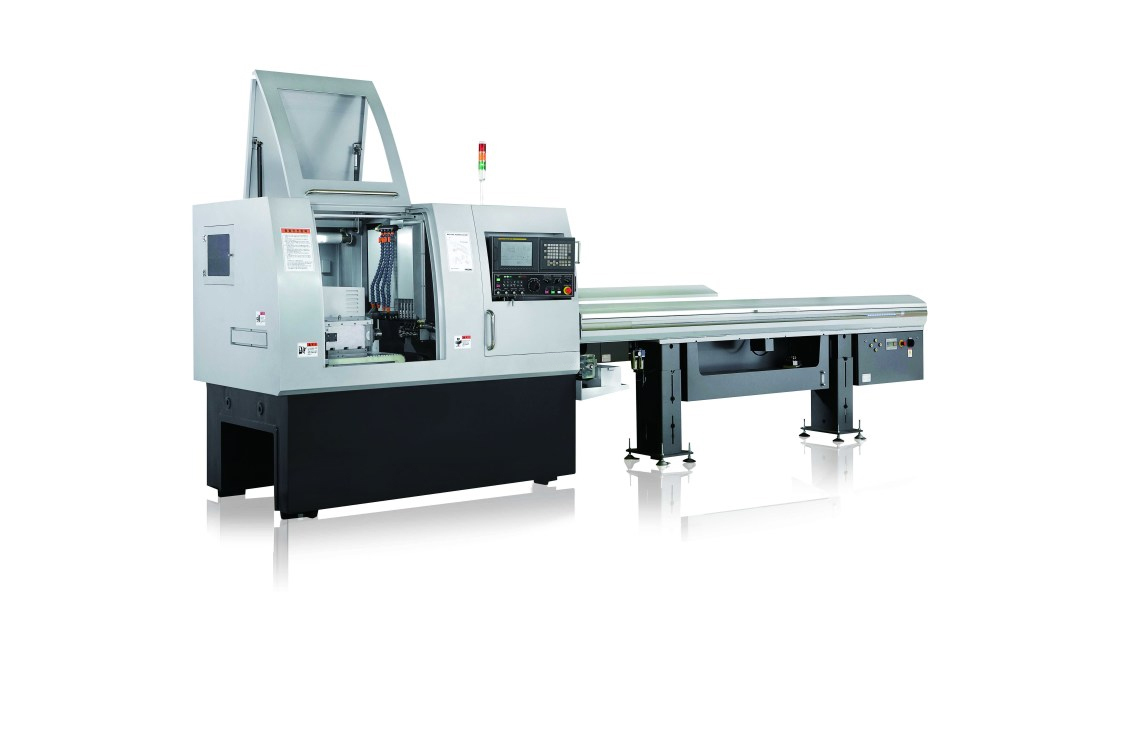
How Swiss-Type CNC Lathe Machines Achieve High Precision and Tight Tolerances
The Swiss type CNC lathe gets down to micron level precision thanks to those hardened guide bushings which basically stop parts from bending out of shape while they're being machined. What sets them apart from regular lathes is this sliding headstock thing where the cutting tools sit much closer to where the workpiece actually rests. According to some research published last year in Precision Machining Quarterly, this design cuts down on vibration problems by almost two thirds when working with those tricky long and thin parts. The result? These machines can handle really tiny details without stopping, even stuff as narrow as half a millimeter across, all while keeping position accuracy within plus or minus 0.0003 inches. That kind of repeatability makes a huge difference for manufacturers dealing with complex components.
Tolerances Down to ±0.0001 Inches: Capabilities of Swiss-Type Lathes
The machines are capable of holding tolerances tighter than 2.5 microns (about 0.0001 inches) on those really important diameter measurements. They achieve this through several key technologies including linear motor drives that get rid of any backlash problems, temperature controlled oil bath spindles which maintain around plus or minus 0.00004 inch radial accuracy, and built in probing systems that check dimensions right in the middle of the machining cycle. Many aerospace companies have actually seen about 89 percent fewer fitting problems when they switch from regular CNC machines to Swiss type lathes for making fuel injector nozzles where concentricity needs to be within 0.0002 inch tolerance. This kind of precision makes all the difference in complex manufacturing applications.
The Role of Precision and Accuracy in Medical and Electronics Applications
In pacemaker component production, the 0.001" tolerance on platinum-iridium electrode connectors directly impacts device longevity—undersized parts cause intermittent electrical contacts, while oversized components risk patient tissue damage. Swiss lathes maintain 99.4% first-pass yield rates in these applications through automatic tool wear compensation and dual-spindle finishing.
Case Study: Manufacturing Critical Medical Components with Unmatched Precision
A 2024 study of spinal implant screws showed Swiss-type CNC reduced scrap rates from 18% to 1.2% compared to multi-axis mills. The lathes maintained 0.00015" thread pitch consistency across 500,000 titanium fasteners through adaptive feed rate control linked to real-time load monitoring.
Growing Demand for Tighter Tolerances in Aerospace and Miniaturized Electronics
Aviation regulators now require turbine blade cooling holes to be machined within ±0.0003" positional accuracy—a standard only achievable with Swiss-type machines. Similarly, 5G RF connectors demand 0.0004" surface finishes on gold-plated contacts to prevent signal attenuation, driving 37% annual growth in Swiss lathe adoption for microelectronics.
Superior Stability Through Guide Bushing and Sliding Headstock Design
Swiss-type CNC lathe machines achieve unrivaled stability in tiny part production through patented guide bushing technology and sliding headstock mechanics. This system supports slender workpieces within 0.04 inches of the cutting zone, reducing deflection by up to 90% compared to conventional lathes (Turntech Precision 2024).
Reduced Part Deflection Due to Guide Bushing Enhances Dimensional Stability
Guide bushings function as pressure stabilizers that hold raw materials just about 1mm away from where the cutting tool makes contact. Keeping it so close stops the workpiece from warping during machining, which matters a lot when dealing with things like medical grade titanium rods or those tiny 0.5mm electronic connectors. The positioning stays pretty accurate too, staying within plus or minus 0.0002 inches even on parts that are eight times longer than they are thick. This kind of precision really makes all the difference in manufacturing applications where exact dimensions are absolutely necessary.
Core Advantage: Sliding Headstock & Guide Bushing Technology in Swiss-Type CNC Lathes
The sliding headstock design works differently from traditional stationary spindles because it moves along with the cutting action using those fancy servo controlled ball screws. What this does is maintain the tool position pretty close to the guide bushing area during operation, usually no more than about 3 millimeters away. When this happens, several good things happen at once. The machine experiences much less vibration or chatter, down to around 0.1 microns or below. Surface finish quality stays consistently good too, typically between Ra 0.2 and Ra 0.4 microns. And manufacturers get really high success rates on their first attempt, about 98% when making those tiny channels for microfluidic devices.
Vibration Suppression in Long, Slender Parts During Machining
Guide bushings absorb 85% of harmonic vibrations through dual-stage damping: hydrostatic oil pressure cushions radial forces, and pre-loaded ball bearings neutralize axial oscillations. This enables uninterrupted machining of 20mm-long, 0.8mm-diameter dental implant screws without resonance-induced tool breakage.
Why This Matters for Consistent Quality in Tiny Components
In insulin pump valve production, a 2¼m deflection causes 100% rejection rates. Swiss lathes’ guide bushing system maintains positional stability equivalent to holding a human hair straight within 1/500th of its diameter—a non-negotiable requirement across aerospace fuel nozzles and cochlear implant receiver arrays.
Complex Geometry Machining with Multi-Axis Control and Live Tooling
Swiss-type CNC lathe machines enable intricate micro-machining through coordinated multi-axis movement and rotating live tools. These systems overcome spatial limitations of conventional lathes, making them indispensable for producing complex medical implants and aerospace sensors.
Multi-Axis Capabilities and Live Tooling Enable Off-Center Machining Operations
5-axis control allows tools to approach workpieces at optimal angles while live tooling rotates synchronously with spindle movements. This combination machines undercuts, cross-holes, and 3D contours without secondary operations, maintaining positional accuracy below 5 microns for components like bone screw threads.
Simultaneous Turning, Drilling, and Milling Reduce Process Interruptions
Integrated live tool stations perform turning, drilling, and milling in a single cycle. Continuous machining prevents dimensional inconsistencies from repeated clamping while achieving surface finishes under 8 μin Ra—critical for hermetic seals in microelectronic packages.
Single-Setup Machining Improves Repeatability for Complex Tiny Parts
Swiss-type CNC lathes combine Y-axis control with sub-spindle transfers to complete parts in one chucking. Recent studies show single-setup machining reduces cumulative positioning errors by 82% compared to multi-stage processes. For optical connector ferrules requiring 0.25 mm internal grooves, this ensures ±0.0001" feature consistency across 10,000-unit batches while boosting throughput by 35%.
High-Volume Production Efficiency and Automation Integration
Efficiency in High-Volume Production of Tiny Parts Drives ROI
Swiss type CNC lathes really shine when companies need to crank out large quantities of parts without sacrificing accuracy. Most modern setups come equipped with automatic tool changers and often feature two spindles working at once so production doesn't stop between operations. A recent industry report from 2024 showed that applying lean manufacturing techniques can cut down on wasted time during micro machining by around 40%. When it comes to making medical devices such as bone screws or tiny catheter ends, these machines typically hit over 98% success rate on the first try even when running through batches of 20 thousand plus components each week. That kind of reliability makes them stand out among other CNC machining solutions looking to automate their processes efficiently.
Cycle Time Reduction Through Sub-Spindles and Automation
Advanced models employ sub-spindles to transfer workpieces between operations without stopping the machine, slashing cycle times by 35–50%. This automation minimizes human intervention while maintaining ±0.0002" tolerances across batches—particularly beneficial for micro-electronic contacts and watch components requiring flawless surface finishes.
Increased Productivity with Multi-Axis and Dual-Spindle Configurations
| Capability | Conventional CNC Lathes | Swiss-Type CNC Lathes |
|---|---|---|
| Simultaneous operations | 2–3 | 5–7 |
| Setup changes per batch | 3–5 | 1 |
| Diameter range | 0.5"–6" | 0.04"–1.5" |
The multi-axis control in Swiss-type machines enables drilling, turning, and milling operations in a single setup—ideal for fuel injector nozzles and aerospace fasteners requiring complex geometries. Dual-spindle configurations further boost throughput by allowing parallel processing of parts under 0.25" diameter.
FAQ Section
What is a Swiss-type CNC lathe?
A Swiss-type CNC lathe is a precision machining tool designed for making small, intricate parts with extremely tight tolerances. It features a sliding headstock and guide bushing design that minimizes vibrations and deflection.
How accurate are Swiss-type CNC lathes?
Swiss-type CNC lathes can maintain tolerances tighter than ±0.0001 inches, making them ideal for applications requiring high precision such as aerospace and medical device manufacturing.
Why are Swiss-type machines preferred for micro-machining?
Due to their ability to reduce vibrations, minimize tool chatter, and maintain positional accuracy, Swiss-type machines are preferred for producing components with complex geometries in high-volume operations.
What applications benefit from Swiss-type CNC lathes?
Swiss-type CNC lathes are beneficial in industries such as aerospace, medical, electronics, and automotive where production of small parts with complex details and tight tolerances is required.
Table of Contents
-
How Swiss-Type CNC Lathe Machines Achieve High Precision and Tight Tolerances
- Tolerances Down to ±0.0001 Inches: Capabilities of Swiss-Type Lathes
- The Role of Precision and Accuracy in Medical and Electronics Applications
- Case Study: Manufacturing Critical Medical Components with Unmatched Precision
- Growing Demand for Tighter Tolerances in Aerospace and Miniaturized Electronics
- Superior Stability Through Guide Bushing and Sliding Headstock Design
- Reduced Part Deflection Due to Guide Bushing Enhances Dimensional Stability
- Core Advantage: Sliding Headstock & Guide Bushing Technology in Swiss-Type CNC Lathes
- Vibration Suppression in Long, Slender Parts During Machining
- Why This Matters for Consistent Quality in Tiny Components
- Complex Geometry Machining with Multi-Axis Control and Live Tooling
- High-Volume Production Efficiency and Automation Integration
- FAQ Section