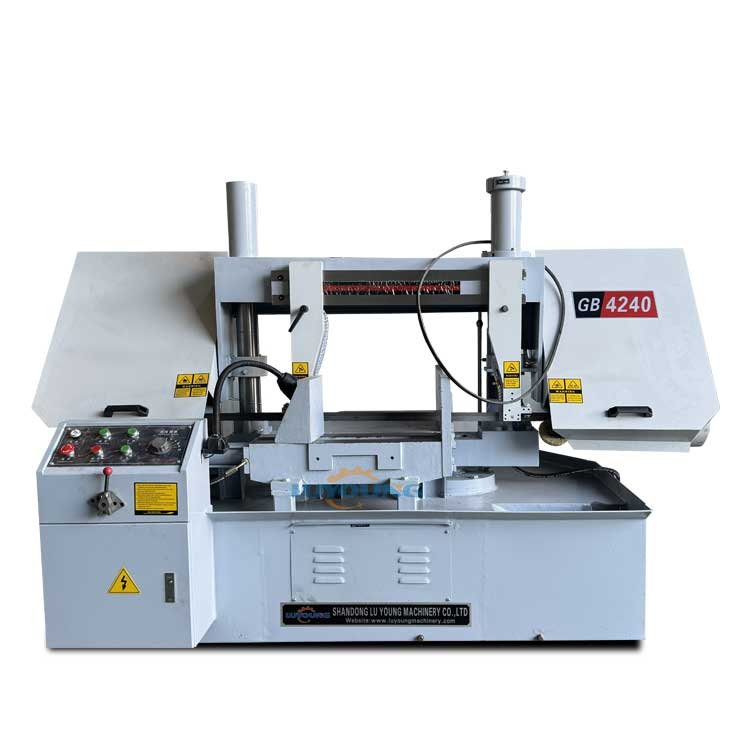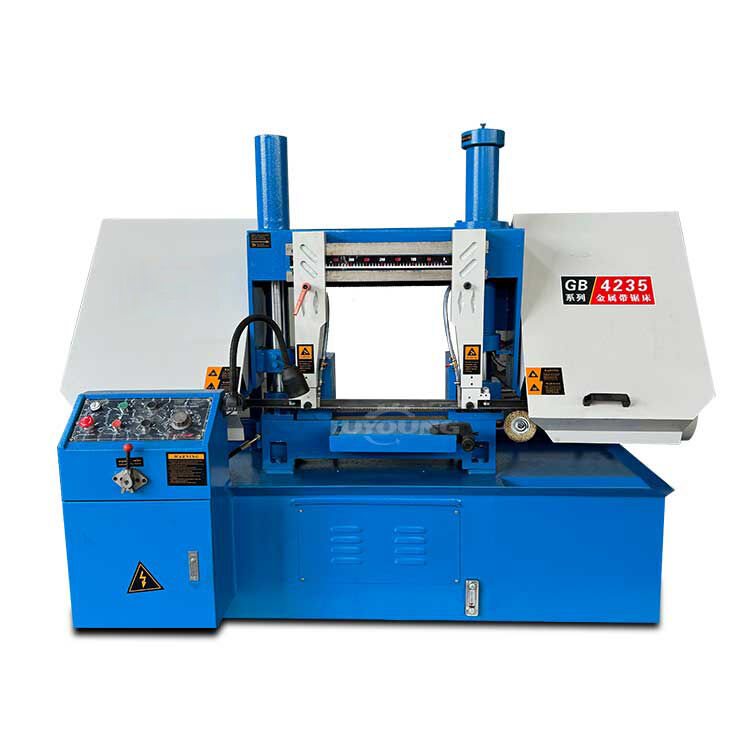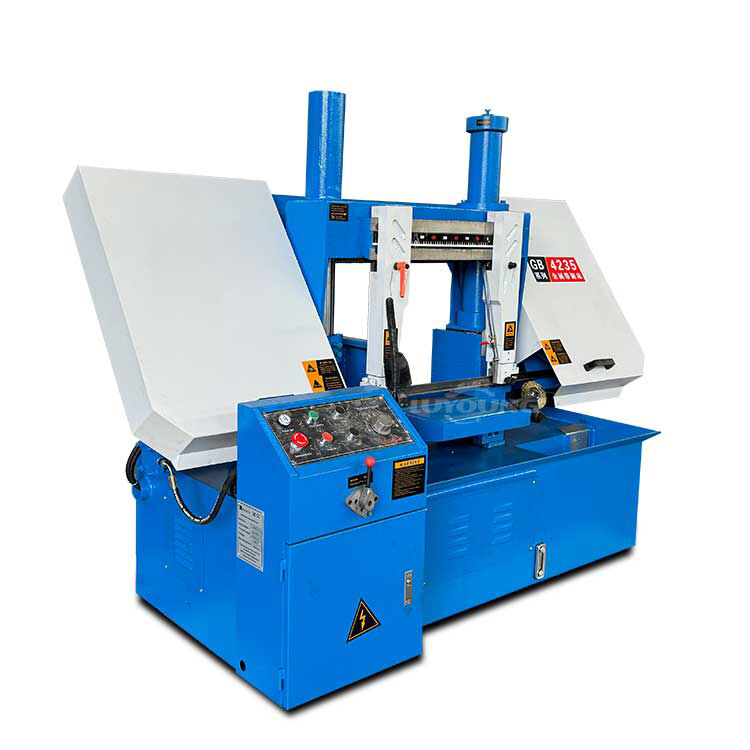
A metal band sawing machine represents a critical first-step investment for efficient material management in metalworking. Its primary role is to convert long stock—rounds, squares, tubes, and irregular profiles—into precise blanks with minimal kerf loss, directly contributing to material savings and reduced machining time downstream. The engineering behind these machines focuses on achieving an optimal balance between cutting force, blade speed, and feed pressure to ensure straightness, squareness, and a good surface finish on the cut piece. Advanced models feature brushless servo motors for the blade drive and feed mechanism, providing exceptional control, energy efficiency, and reliability. Automatic blade tensioning, guided blade guides, and built-in material clamping systems are standard features that enhance cut quality and operational safety. A prominent application is within the aerospace industry, where high-strength, temperature-resistant alloys like Inconel or Titanium are commonly used. Cutting these materials requires a band saw with a robust frame to dampen vibrations, a low and variable blade speed range to prevent work-hardening, and a high-pressure coolant system to dissipate heat effectively. For example, cutting titanium billet for aircraft landing gear components demands such precise control to avoid introducing micro-cracks or excessive heat-affected zones. In the construction and architectural metalwork sector, band saws are used to cut structural I-beams, channels, and wide-flange sections. Here, the machine's throat capacity and the ability to make clean, accurate cuts are paramount for ensuring proper fit-up during welding and assembly, which affects the overall strength and safety of the structure. For smaller, precision-oriented shops like those manufacturing medical instruments, a compact vertical band saw might be used for intricate contour cutting of small stainless steel or aluminum parts, in addition to straightforward cutoff work. The versatility to perform both operations on a single machine is a significant advantage. When evaluating a metal band saw, factors such as the machine's construction (e.g., welded steel frame vs. cast iron), the sophistication of its control system, and the availability of after-sales service and technical support are crucial. We understand that selecting the right equipment is a significant decision. To receive expert guidance and a detailed quotation for a metal band sawing machine that aligns with your production goals and budget, please reach out to our customer service team. We are here to provide a solution.