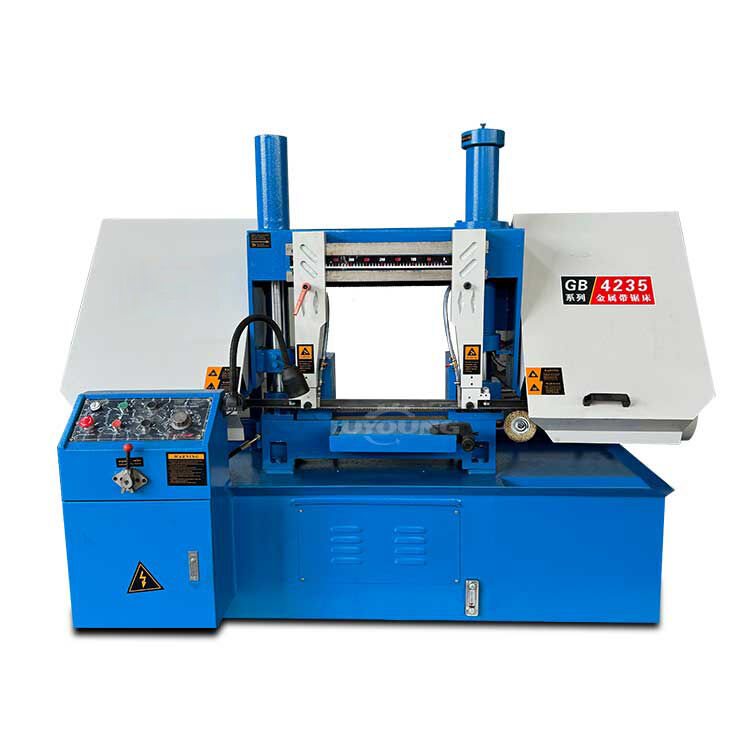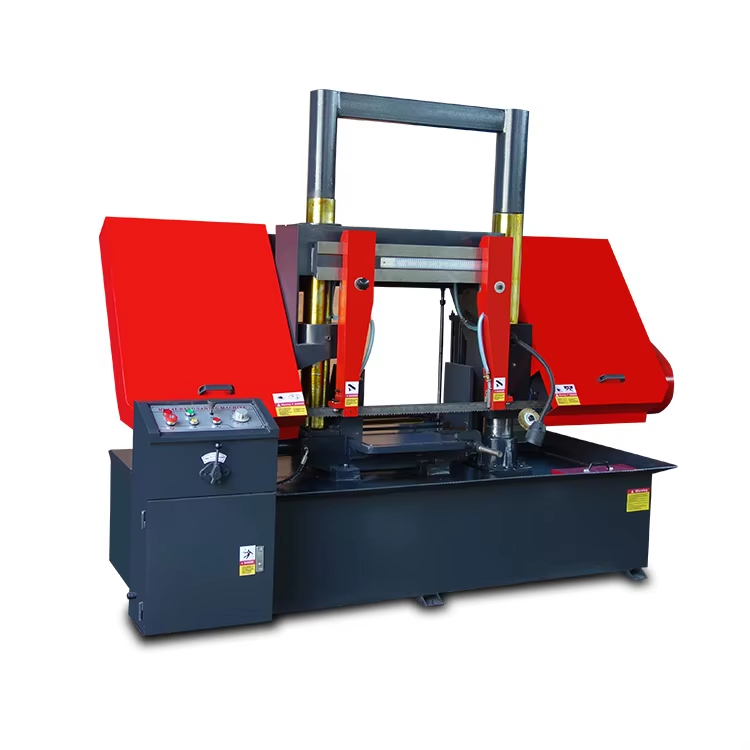
In modern industrial manufacturing and metal processing, the metal band sawing machine stands as a pivotal piece of equipment for primary material cutting. Its core function is to perform straight, angular, or contour cuts on various metal workpieces, such as bars, pipes, and structural steel, with high efficiency and precision. The operational principle involves a continuous, serrated metal band blade rotating over two or more large wheels, creating a consistent, linear cutting motion. This method is renowned for its narrow kerf, which significantly minimizes material waste—a critical factor in cost-sensitive, high-volume production environments. Key technical parameters that define a machine's capability include the cutting capacity (round and rectangular), blade speed, feed system (gravity, hydraulic, or CNC servo), and the power of the main motor. For instance, a robust machine designed for cutting large-diameter alloy steel would feature a high-torque motor, a variable speed control system to match the blade speed to the material's hardness, and an automatic hydraulic feed mechanism to ensure consistent cutting pressure and prolong blade life. A common application scenario is in a steel service center or a fabrication shop, where incoming long stock of raw materials must be cut down to specific blanks before they can proceed to subsequent machining processes like CNC turning or milling. For example, a manufacturer producing hydraulic cylinder rods would use a semi-automatic metal band saw to cut chrome-plated steel bars into precise lengths. The ability to make square, burr-free cuts directly impacts the quality of the final product, as inaccuracies at this initial stage can lead to alignment issues or excessive waste in later, more expensive machining operations. Another critical application is in the maintenance, repair, and operations (MRO) sector, where versatility is key. A portable or small vertical band saw allows technicians to cut diverse materials on-site, from stainless steel pipes for plumbing repairs to aluminum extrusions for custom frame modifications. When selecting a metal band saw, engineers must consider the primary material types, the required daily output, and the desired level of automation. Basic manual models offer flexibility for job shops, while fully CNC-controlled systems with integrated material handling robots can achieve lights-out production for mass manufacturing. To obtain detailed specifications and a competitive price quote for a metal band sawing machine tailored to your specific material and production requirements, please do not hesitate to contact our technical sales team for a comprehensive consultation.